
What if a few simple choices could keep your digital identity out of sight?
You need a clear, practical way to manage exposure when using online generative tools today. This brief guide helps you spot risks and act fast. It focuses on steps you can take to reduce data leaks and avoid unwanted attention.
Understanding this complex landscape starts with small habits. You will learn how to adjust account options, limit data sharing, and pick safer tools for your projects. Each move you make can lower the chance of your personal information being exposed.
Read on to find actionable tips that make anonymous generation realistic and repeatable. These methods keep your work private while still letting you use powerful creative platforms.
Key Takeaways
- Adjust account options to limit data collection.
- Choose tools that respect minimal user tracing.
- Use a step-by-step way to obscure identifying details.
- Regularly review permissions and linked services.
- Small, consistent habits greatly reduce exposure risk.
Understanding the Risks of AI Content Generation
Modern creative models rely on enormous fuel: raw data from the web. You should know what that fuel contains and how it can affect your work and life. This short section explains the main hazards so you can plan safer behavior.
The Data Hunger of Large Models
Large models are trained on massive collections of text and images. For example, DALL-E 2 used about 650 million text-image pairs pulled from the internet to improve results.
The openly accessible LAION-5B dataset holds some 5.6 billion images. That scale means personal information or images you once posted could be part of a training dataset without notice.
Risks of Sharing Sensitive Content
When you send prompts or upload content, the company behind a tool may use those inputs to refine services and future products.
Models can sometimes reproduce identifiable information that was scraped during training.
That memorization risk means sensitive text or images might be exposed later. The legal side is complex, since many companies cite current law to justify data collection. Be cautious: sharing private content can lead to real-world breaches.
- Inputs you provide may be used in training cycles.
- Models can inadvertently reveal scraped identifiable information.
- Legal protections vary, so review each company’s policy and services.
Essential AI Porn Generator Privacy Settings
Start by locking down the account options that control what the system stores about your work. Most major companies now give users clear ways to manage how data is held and deleted over time.
Review the app’s policy before you upload or prompt. Check what information the company collects and whether your inputs may be used to improve products or services.
For example, Google Bard offers a method to delete history manually or set it to auto-delete after a set time. Use that way to limit what data collected about your activity remains in place.
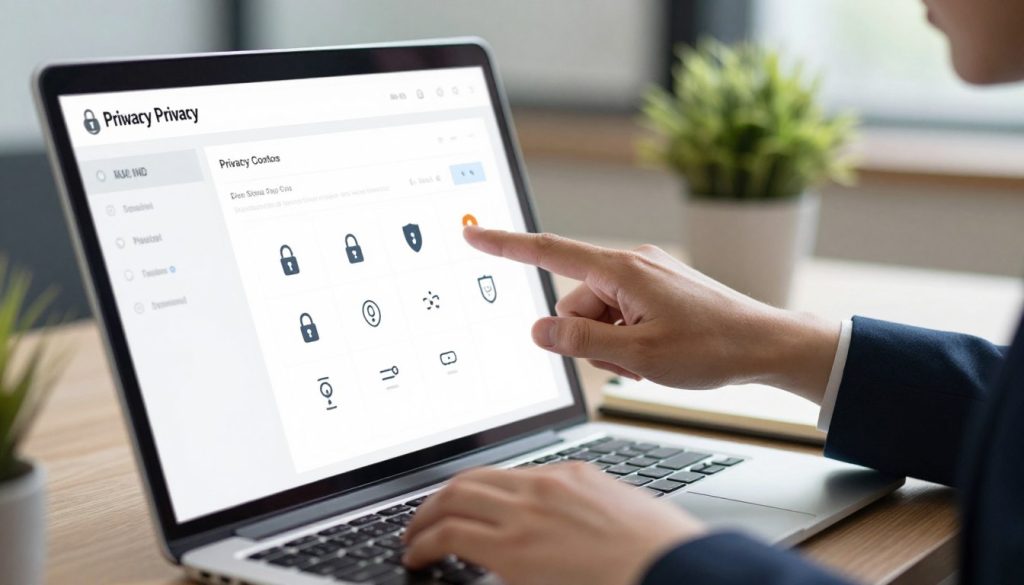
Look for a centralized system in the account panel where you can review past content and remove anything sensitive. This gives you more control and reduces the chance that your data will feed future models.
Setting strong account rules is a critical step to prevent third-party services from accessing or reusing your information.
- Confirm how apps and services store user data.
- Enable auto-delete or remove history regularly.
- Place guardrails to stop unauthorized data collection.
Protecting Your Identity and Personal Likeness
You can reduce the chance of misuse by treating uploads and prompts as public by default.
Avoid uploading photos or any media that shows your face. Bad actors prize real images because they can train models to impersonate people. If you must use images, blur faces and remove identifying background details.
When you write prompts, do not include names, addresses, dates, or other personal information. Keep text generic so the tool cannot link outputs back to you.
Avoiding Facial Recognition and Likeness Exploitation
Many models use scraped data during training. That training can let systems reproduce or re-identify source likenesses.
Researchers have shown it is possible to re-identify source identities that contributed to generated faces with GANs.
- Check terms to see if the system lets you opt out of having your face used for training.
- Limit the amount of personal information you share to lower exploitation risk.
- Be cautious with generated output; it may leak identifiable information from prior training data.
| Action | Why it helps | Quick result |
|---|---|---|
| Blur or avoid photos | Prevents faces from entering training datasets | Lower likeness risk |
| Strip personal details from prompts | Stops outputs linking to your identity | Fewer traces in generated content |
| Review terms of service | Protects your image rights and legal side options | Clear opt-out choices |
| Limit shared data | Reduces material available to bad actors | Safer online presence |
Managing Data Collection and Training Opt-Outs
Take direct steps to stop your work from feeding future models by managing how data flows online.
Start by auditing what the system has already stored about you. You can search platforms that index public content to see if images or text tied to you appear in a dataset. If you find matches, follow the removal process those sites provide to remove personal traces.

Requesting Data Removal from Datasets
Use services like Have I Been Trained? to locate files that contain your images or text. Then file formal removal requests with the host or the company that maintains the dataset.
It can take time, but repeated requests and clear proof of ownership help speed removal.
Using Privacy-Focused Browsers
Choose browsers that block trackers and reduce the data collected by web companies. Apple ATT and tracker blockers limit cross-site tracking so firms build fewer profiles for training.
Opting Out of Model Training
Check each company’s policy for an opt-out pathway. Many firms now offer clear ways for users to stop their content from being used for training.
| Action | Why it helps | Quick result |
|---|---|---|
| Search indexed datasets | Find where your content appears | Targeted removal requests |
| Submit removal claims | Removes personal images or text from public datasets | Less chance your work feeds models |
| Use tracker-blocking browsers | Reduces data collected across the web | Smaller profile built by companies |
| Opt out with companies | Stops your content from training future systems | More control over output use |
- Understand that the internet retains copies; act promptly to remove personal items.
- Manage your choices so companies cannot reuse your work without consent.
- Repeat checks over time to maintain control of your digital footprint.
Navigating the Legal and Ethical Landscape
You face a shifting legal map when systems learn from public internet material. Law and policy are evolving slowly while companies update how they collect and use data.
Know the players and the scale. For example, Stable Diffusion was released by StabilityAI in August, and some 1.5 million people were using DALL‑E as of September. That shows how many users and products can affect real-world life.
Be alert: the data collected from the web often helps train models. Researchers have shown that systems can memorize and reproduce identifiable information, which puts your personal information at risk.
“Clear rules and strong enforcement are needed so companies take responsibility for training data and dataset use.”
Practical steps you can take include reading each company policy, limiting what you share online, and staying informed about new laws. This way, you help protect your information and lower the chance that bad actors will exploit outputs or content.
- Review company policy before you upload or share.
- Audit what data about you is public and request removal where possible.
- Follow legal updates so you can act if rules change.
Conclusion
Take control now. You can reduce risk by acting on simple, repeatable habits that protect your digital identity.
Understand how platforms collect and use data so you can make choices that preserve your rights online. Look for clear opt-out options and tools that let you remove content when needed.
Keep your uploads and prompts generic, limit identifiable details, and check account options often. Staying informed about law and policy changes helps you respond when rules shift.
Start with small steps today to keep your likeness and content secure in an automated world.
FAQ
What basic steps can you take to generate content anonymously?
Use a privacy-focused browser like Brave or Firefox with tracking protection, connect through a reputable VPN, and create a separate account that doesn’t include your real name or identifying contact details. Clear cookies and use private browsing for sessions. Also avoid uploading personal photos or recordings when creating material.
How do models collect data and why does that matter?
Models learn from large corpora scraped from the web, public forums, and licensed datasets. That means material you post publicly can be re-used in future systems. Keeping sensitive content off public channels and checking service policies reduces the chance your material becomes part of training corpora.
What are the main risks of sharing intimate or sensitive content online?
Shared files can be copied, redistributed, or matched by facial-recognition tools. They may be used without your consent, exposed in data breaches, or leveraged by bad actors for blackmail. You should assume anything posted publicly can become persistent and potentially visible later.
Which product options help limit data retention and reuse?
Look for services that offer session-only processing, explicit “no model training” clauses, and clear data-deletion policies. Companies such as OpenAI and Google provide guidance pages on data usage; prefer platforms that let you opt out of training and that delete uploads on request.
How can you prevent facial recognition and likeness exploitation?
Avoid supplying real face images or voice samples. If you must use a likeness, apply strong obfuscation—blur, crop, or use synthetic substitutes. For public figures, the risk is higher; for private individuals, never share unconsented photos of others.
What are realistic options for getting personal data removed from training datasets?
Start by contacting the company with a formal removal request under their published procedure or via privacy@ or support channels. If the provider fails to act, you can escalate to regulators under laws like the CCPA or GDPR where applicable. Keep records of requests and responses.
Which browsers and tools best reduce tracking and fingerprinting?
Brave, Firefox with privacy extensions, and the Tor Browser minimize tracking. Add-ons like uBlock Origin, Privacy Badger, and script blockers reduce fingerprinting. Combine these with a strong VPN and avoid logging into personal accounts during sensitive sessions.
Can you opt out of having your uploads used to train models?
Some platforms allow explicit opt-outs; others do not. Always read terms of service and privacy clauses before uploading. Prefer vendors that provide an opt-out mechanism or guaranteed ephemeral processing if avoiding training is essential to you.
What legal protections can you rely on if your likeness is used without consent?
Laws vary by location. In many U.S. states you can pursue claims under right-of-publicity, invasion of privacy, or state privacy statutes. In the EU, GDPR gives rights to access and erase personal data. Consult a lawyer experienced in digital privacy for case-specific advice.
How should you handle requests from services to remove content or data?
Use the service’s formal takedown or privacy request channels and provide clear proof of ownership or identity where required. Keep copies of correspondence, note response deadlines, and escalate to regulators or legal counsel if the provider does not comply.
What role do companies’ policies play in protecting your information?
Company policies determine how long uploads are stored, whether they can be used for training, and what controls users get. Choose services with transparent, enforceable privacy commitments and positive track records on data handling.
How can you reduce exposure when using mobile apps or web tools?
Review app permissions, disable microphone and camera access when not needed, and limit file uploads. Use a device account separate from your personal profile and install apps only from trusted stores to lower the risk of background data collection.
What precautions help protect minors and other vulnerable people?
Never upload images or recordings of minors. For vulnerable adults, obtain clear informed consent and avoid sharing identifying details. Use strict access controls and avoid services that allow public sharing by default.
How do breaches and bad actors factor into your safety plan?
Assume breaches are possible and minimize the amount of personal material you store online. Use strong, unique passwords, enable two-factor authentication, and avoid centralized repositories of sensitive files to limit damage if a provider is compromised.
Where can you find trustworthy guidance and tools for safer use?
Look to reputable organizations and company support pages for up-to-date guidance—Electronic Frontier Foundation, the National Cyber Security Alliance, and privacy pages of major vendors like Apple, Google, and Microsoft. They publish practical steps and tool recommendations.