
Can you stop unwanted artifacts and boost the realism of your generated images and videos with a single tweak?
You can. Stable Diffusion models respond to carefully chosen instructions that remove unwanted elements like extra fingers, fused limbs, or a poorly drawn face. Using targeted negative phrasing helps steer the model toward cleaner results.
The Aitubo AI Video Generator uses Stable Diffusion technology to turn text into high-quality video. When you pair it with tools like Aiarty Image Enhancer and embeddings such as EasyNegative, you can upscale output to 4K and cut down on bad anatomy, extra limbs, and odd hands.
This short guide shows how to craft exclusions that protect realism and clarity. You’ll learn how to fix eyes, face details, feet, arms, and legs so the final image or video matches your creative vision.
Key Takeaways
- Use exclusions to remove extra fingers, fused limbs, and poorly drawn face features.
- Stable Diffusion responds well to focused guidance and negative embeddings like EasyNegative.
- Aitubo and Aiarty tools can improve video and image quality when combined with proper exclusions.
- Target anatomy issues—hands, feet, arms, legs—to boost realism.
- Clear, short instructions yield cleaner, more professional generated images and videos.
Understanding the Role of Negative Prompts
When you tell a model what to avoid, the resulting images and video often look cleaner and more professional.
What are negative prompts
A negative prompt is a short instruction that tells the generation tool to exclude specific elements from your content. It acts like a filter, removing common issues such as bad anatomy, fused limbs, or low-resolution artifacts.
How negative prompts improve quality
In Stable Diffusion workflows, targeted exclusions sharpen focus and reduce unwanted details in the output. By saying what should not appear, you steer the model toward clearer, more relevant results.
For example, if you want a scene without buildings, include that exclusion in your prompt to prevent those elements from appearing. This method is especially useful for videos, where consistent frames and coherent anatomy matter most.
Tip: Combine concise negative prompts with positive instructions for best results. That balance keeps your generated content aligned with your creative intent while boosting overall quality.
- Acts as a filter for unwanted features.
- Reduces common Stable Diffusion artifacts.
- Improves clarity and consistency in videos and images.
Essential Negative Prompts for AI Porn and Quality Control
A short set of exclusion lines can remove common defects and lift overall output quality fast.
Use a concise list that targets common video and image flaws: “worst quality,” “low quality,” “jpeg artifacts,” and “blurry.” These terms act as filters that cut down on compression issues and haze.
Address visual defects directly. Add phrases for “poorly drawn face,” “poorly drawn hands,” “poorly drawn feet,” and “bad anatomy” to reduce awkward details in faces and hands.
Filter anatomical glitches by excluding missing arms, missing fingers, extra limbs, fused fingers, or disconnected limbs. This helps keep character poses believable.
- Block composition errors: split image, out of frame, out of focus.
- Remove artifacts: distortion, text, watermark, logo, signature, username.
- Maintain consistency: use the best negative terms early to protect each frame in videos.
For stable diffusion workflows, combine these exclusions with clear positive direction. That balance preserves your creative intent while improving overall quality across images and videos in your projects.
Mastering Anatomical Accuracy with Negative Prompts
Getting limb proportions right is one of the fastest ways to make a generated character feel believable.
Anatomical accuracy matters for realism. Use targeted exclusions to filter out missing arms, extra limbs, and other common errors. This keeps each frame and image consistent across a sequence.
Managing Limb Proportions
Start by listing common proportion faults you see: short legs, long arms, or odd joint placement. Add concise entries to your negative prompt list that call these out.
Correcting Body Anatomy
Include terms that block bad anatomy and poorly drawn hands. Focus on hands, feet, fingers, and face details to avoid awkward results.
Avoiding Distorted Poses
Flag fused limbs, twisted joints, and disconnected elements. Clear exclusions reduce distorted poses and keep poses natural in every video or still.
| Issue | Common Result | Example Exclusion |
|---|---|---|
| Extra limbs | Multiple arms or legs | extra limbs, extra arms |
| Poor hands | Strange fingers, fused digits | poorly drawn hands, extra fingers |
| Face errors | Asymmetry, odd proportions | poorly drawn face, distorted facial features |
| Bad anatomy | Unnatural posture | bad anatomy, missing arms |
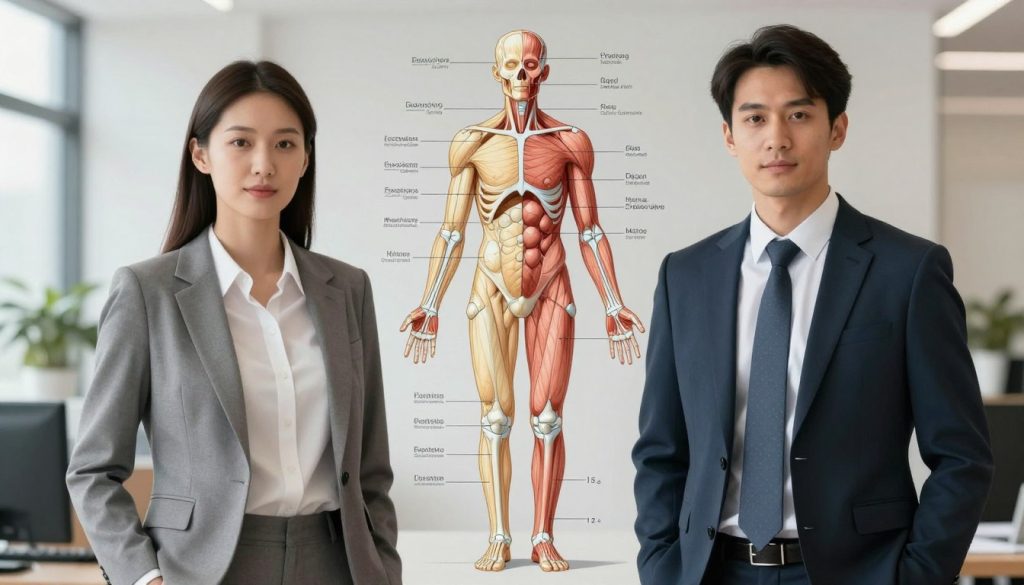
- Tip: Keep exclusions short and test iteratively.
- Combine exclusions with positive direction to preserve creative intent.
Refining Facial Features and Expressions
Small adjustments to face-level exclusions can dramatically improve realism in portraits. You should focus on clear terms that filter out common facial faults without overloading the instruction set.
Achieving believable eyes and skin starts with targeted exclusions. Use concise lines like “poorly drawn face,” “asymmetrical,” and “distorted facial features” to reduce warped results.
For eyes, add specific entries to prevent artifacts such as “extra eyes,” “deformed pupils,” or “cross-eyed.” These lines protect the focal point of a portrait and keep gaze direction natural.
Skin texture matters, too. Block phrases like “ugly textures,” “poor skin texture,” and “excessive makeup” to avoid blotchy or unnatural surfaces.
Practical checklist
- Filter bad proportions: avoid cloned face or warped jawlines.
- Target eyes: exclude deformed pupils and extra eyes to maintain focus.
- Improve skin: block ugly textures and heavy makeup artifacts.
- Keep limbs consistent: mention fingers, hands, feet, arms, and legs when relevant to full-body images.
Refining these elements helps your images feel more natural. Test short lists and iterate until facial expressions read as intended. These small edits will make the final image far more convincing.
Handling Hands and Fingers in AI Generations
Few elements break an image’s realism as quickly as poorly rendered hands.
Hands and fingers are tricky for many models. Common faults include extra fingers, fused fingers, and deformed hands. These issues ruin the final image and distract from the face and eyes.
Use short exclusion lines such as “poorly drawn hands,” “extra fingers,” and “fused fingers” to filter out bad hands. Add a single line for “missing fingers” or “awkward positioning” when you expect complex poses.
For example, when you render a person holding an object, include those exclusions early. This helps keep finger placement natural and avoids strange grips. Pair these lines with clear positive direction for pose and palm visibility.
- Key wins: fewer deformed hands, cleaner fingers, better quality images.
- Also mention arms, feet, and legs when generating full-body art to keep anatomy consistent.
Advanced Techniques for Stable Diffusion Negative Prompts
Fine-tuning weight and blend settings gives you step-level control over what the model emphasizes or ignores.
Adjusting Prompt Weights
Use parentheses to raise attention and square brackets to lower it. For example, (face) or [fingers].
This method adjusts how strongly a line affects the image. A small multiplier like (word:1.1) nudges the model without overwhelming other directions.
Using Prompt Blending
Blend multiple lines with syntax such as (styleA | styleB) or [word | word].
You can also switch focus over steps with [detailA:detailB:step] or set percentages to shift emphasis mid-generation. This helps lock consistent arms, legs, feet, and face details across frames in a video.

- Start light: small weight changes then test.
- Combine blends for nuanced exclusion of poorly drawn elements.
- Use step switching to protect critical anatomy late in diffusion.
| Technique | Use | Example |
|---|---|---|
| Weight boost | Increase focus | (face:1.1) |
| Weight reduce | Lower influence | [fingers] |
| Blending | Combine styles | (realism | sharp) |
Using Negative Prompt Embeddings for Better Results
Think of embeddings as shortcut filters that reduce common flaws in generated images and video. They are pre-trained vectors you load into your Stable Diffusion setup. Once active, a trigger word applies the encoded exclusions without long text entries.
Popular options include EasyNegative, FastNegativeV2, and negative_hand. These files focus on common issues like poorly drawn face features, extra fingers, and bad hands.
To use an embedding, place the file in your model’s embeddings folder and restart the interface. Then include the trigger word in your prompt or embedding list. Without the file, the trigger is just text and has no effect.
Benefits are clearer, more consistent results across frames and images. A negative hand embedding, for example, can cut down on fused digits and awkward finger placement.
| Embedding | Purpose | Example trigger |
|---|---|---|
| EasyNegative | General artifact and texture filter | easyn |
| FastNegativeV2 | Speed-focused flaw reduction for images | fastnegv2 |
| negative_hand | Hands, fingers, and grip consistency | neg_hand |
- Load files, use trigger words, and test iteratively for best results.
- Combine embeddings with concise prompts to protect faces, feet, arms, and legs.
Practical Workflow for Generating High-Quality Content
Start with a clear plan. Begin with a descriptive base prompt that sets pose, lighting, and mood. Pick your Stable Diffusion model and load any embeddings or exclusions you want to use.
Post-Generation Upscaling and Enhancement
Render your image or video in the Aitubo AI Video Generator or another diffusion tool. Keep the initial render focused on composition and face/limb accuracy—avoid overcomplicating the prompt early.
After render, batch process frames or images with Aiarty Image Enhancer to upscale to 4K. This step restores skin, hair, and fabric texture that the first pass may lack.
Finally, review for common faults like poorly drawn fingers or odd feet and arms. Tweak and re-render small sections when needed. Iterate until the output meets your quality goals.
- Start with a focused prompt, then add concise exclusions.
- Render with Stable Diffusion models, export frames.
- Use Aiarty for 4K upscaling and texture repair.
Conclusion
Mastering a single negative prompt approach helps you shape cleaner, more believable generated images and video.
Use the strategies here to raise the overall quality of your work. Be specific with short prompt lines that target the face, eyes, hands, fingers, feet, arms, and legs. That focus reduces common faults like poorly drawn face features, extra fingers, or bad hands.
Combine embeddings and weight tweaks in Stable Diffusion and test small changes. Iteration preserves realism and fixes bad anatomy fast. Keep attention on key elements and review each render until the final image meets your goal.
Start small, iterate often, and let these techniques help you create clearer, higher-quality art and videos.
FAQ
What is the purpose of using negative keywords in image generation?
You use negative keywords to tell the model which elements to avoid, improving image clarity and realism by reducing unwanted artifacts such as extra limbs, poor anatomy, or distorted faces.
How do you balance exclusion lists without losing creative detail?
Start with concise exclusions for common issues (like extra fingers or poorly drawn faces), then refine by testing. Remove or relax entries that remove desired detail, and keep those that consistently cause visible errors.
Which exclusion terms most effectively reduce anatomy problems?
Focus on terms covering hands, fingers, limbs, and faces—phrases targeting extra limbs, bad hands, extra fingers, and malformed faces help the model avoid common anatomical mistakes.
How can you prevent distorted poses and proportions?
Add clear avoidance phrases for warped limbs, incorrect joint placement, and strange torsos. Combine that with guidance on correct posture in your positive instructions so the model has a reference for natural poses.
What strategies improve facial realism and eye detail?
Exclude descriptors that create unrealistic eyes or poorly drawn face features, and pair those exclusions with high-quality reference terms for skin texture, realistic eyes, and accurate facial anatomy.
How do you handle hands and fingers to get natural results?
Include exclusions for extra fingers, bad hands, and malformed palms. Also provide positive cues emphasizing anatomically correct fingers and natural hand poses, and consider targeted upscaling or inpainting after generation.
When should you use prompt weights or blending techniques?
Use weighted exclusions when a single term over-corrects or under-performs, and employ blending to merge different styles or constraints so the model balances realism with artistic intent.
What role do embeddings play in refining exclusions?
Embeddings let you encode common exclusion sets as compact tokens, making it easier to reuse a consistent avoidance list across runs while keeping prompt length manageable.
How do you incorporate post-generation enhancement into your workflow?
After generation, apply upscaling, denoising, and targeted fixes (inpainting) for hands, faces, or limbs. This workflow helps salvage images that are close but need localized correction.
How do you test and iterate exclusion lists effectively?
Run controlled batches varying one exclusion at a time, review outputs for recurring issues like extra limbs or poorly rendered faces, and keep a shortlist of high-impact exclusions you reuse across projects.